
A scissor lift is a working platform that is designed to lift people and equipment vertically so that they can work at greater heights whilst being as safe as possible. a Scissor lift is a type of manlift that is found mainly on construction sites. They usually range from 19ft-60ft.
They are common in the construction industry for workers to have easier and safer access to working at heights. It is also not uncommon to see scissor lifts being used in warehouses and supermarkets.
There are lots of different types of scissor lifts, coming with different reachable heights and are powered in different ways. This means that they are flexible pieces of machinery. If you need to work at heights, you can guarantee there will be a scissor lift that’s ideal for the job.
These work platforms are often powered by hydraulics, which can either be engine-driven or hand-operated. The hydraulics in the scissor allows for the platform to be raised and lowered appropriately.
There are also pneumatic scissor lifts. These are compressor-powered lifts that do the same thing, but the platform is raised by using an air compressor or hydraulic fluid. The cylinder is then pushed outwards causing the legs to extend.
Most will have a control mechanism that allows the operator to adjust the height that the platform will be elevated. You can get different types of Scissors lifts such as electric, diesel and more but they all carry out the same purpose.
Yes, scissor lifts can tip over. This type of accident can occur due to several different factors:
Some preventative measures that can be taken to ensure this doesn’t happen is the following:
It is important to make sure that you go through the proper training course to be able to operate a scissor lift. This will ensure that you will be as safe as possible when using the work platform, avoiding mistakes like using objects on the platform to gain higher elevation. If the scissor lift isn’t the correct height for the job, you should get one that is.
You also need to take environmental factors into consideration when using a scissor lift, such as unstable ground and adverse weather conditions. Both can influence the stability and safety of your scissor lift.

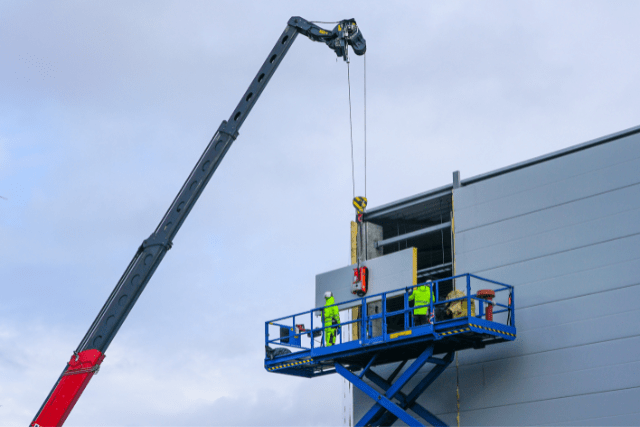
No, there is no legal requirement to wear a harness whilst
operating a scissor lift. It is, however, good safety practice to do so.
Governing bodies such as the Health and Safety Executive, and the International
Powered Access Federation do recommend the use of work restraint systems, along
with proper training and practice working with equipment like this.
It is also strongly recommended that if you are working on a
raised platform near a body of water, that you wear a life jacket in case you
fall in.
Fall safety devices are not recommended as these would need
to be attached to the scissor lift. As they don’t have strong anchor points it
could result in additional injuries.
Whilst you can move a scissor lift while it is elevated, it is advisable that you don’t do this. Always lower the lift when it is being moved. This is going to reduce the risk of an accident occurring such as the lift tipping over and causing serious injury to the operator.
It is good practice to allow at least 6 hours to charge properly before you plan to use it. This is so you can get the maximum use out of your equipment throughout the working day.
We recommend charging the batteries overnight if you know you will need to use them the next day. Charging the battery of your scissor lift for short periods can have a negative effect on its battery health, which could lead to costly repairs.
The cost of a piece of equipment like this mainly depends on the height it can reach. 19-foot scissor lifts can cost anywhere between £9000 and £13,000. Whereas lifts between 20 and 30-foot can cost up to £43,000.
This doesn’t consider any costs related to storing these machines, as well as maintenance and repairs that will need to be done to make sure they are safe for use over a prolonged period.
Access hire is a much more cost-effective solution, which is why we would always recommend it over purchasing one.
At Vertikal UK we hire out Electric, Diesel and Hybrid Scissor Lifts to a range or areas including Scunthorpe, Grimsby, Hull, Lincoln, Doncaster and more.
The cost to hire a scissor lift can vary based on the type of machine you need, the maximum weight and height of the lift, how long you need it for, and the type of job you need it for.
Hiring has several advantages over buying machinery like this. It’s a lot cheaper, you won’t need to worry about storing it for long periods of time and we carry out regular safety checks and maintenance on all our equipment.
Please contact our powered access hire team to learn more about the different types of lifts we have available for hire, what we would recommend for your job, and the costs of hiring them.
| Cookie | Duration | Description |
|---|---|---|
| cookielawinfo-checkbox-analytics | 11 months | This cookie is set by GDPR Cookie Consent plugin. The cookie is used to store the user consent for the cookies in the category "Analytics". |
| cookielawinfo-checkbox-functional | 11 months | The cookie is set by GDPR cookie consent to record the user consent for the cookies in the category "Functional". |
| cookielawinfo-checkbox-necessary | 11 months | This cookie is set by GDPR Cookie Consent plugin. The cookies is used to store the user consent for the cookies in the category "Necessary". |
| cookielawinfo-checkbox-others | 11 months | This cookie is set by GDPR Cookie Consent plugin. The cookie is used to store the user consent for the cookies in the category "Other. |
| cookielawinfo-checkbox-performance | 11 months | This cookie is set by GDPR Cookie Consent plugin. The cookie is used to store the user consent for the cookies in the category "Performance". |
| viewed_cookie_policy | 11 months | The cookie is set by the GDPR Cookie Consent plugin and is used to store whether or not user has consented to the use of cookies. It does not store any personal data. |