



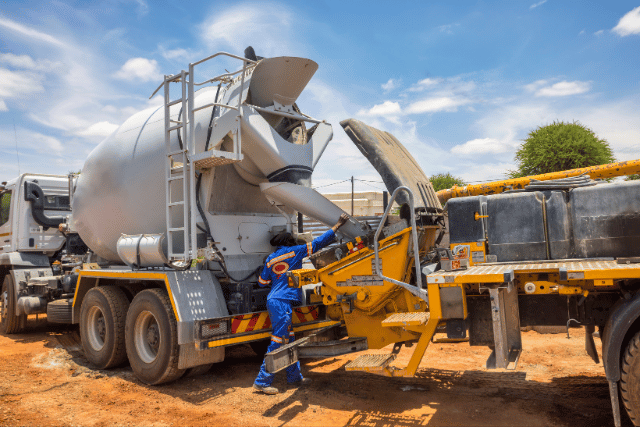
A concrete mixer machine is typically used in construction to mix cement, sand, gravel, and water to create concrete.
It plays a crucial role in ensuring that the concrete mixture is uniform and well-mixed, which is essential for the strength and durability of the final construction project.
Concrete mixers come in various sizes and types, but the most common ones are drum mixers and twin-shaft mixers.
Here is a step-by-step process of how to mix concrete in a mixer:
- The first step in using a concrete mixer is to load the necessary materials into the mixing drum. This typically includes cement, sand, gravel (also known as aggregates), and water. The proportions of these materials are determined by the specific concrete mix design required for the project.
- The mixing drum is a large cylindrical container with blades or fins inside. It is mounted on a rotating shaft, which is connected to a motor. The drum is usually tilted at an angle to facilitate loading and unloading of materials.
- Once the materials are loaded, the drum starts to rotate. The rotation of the drum is typically in one direction, and it can be powered by an electric motor, a gas engine, depending on the type of mixer.
- As the drum rotates, the materials inside are lifted and dropped by the blades or fins. This lifting and dropping action, combined with the rolling motion of the drum, helps to thoroughly mix the materials together. The continuous rotation of the drum ensures that the mixture becomes uniform.
- Water is usually added gradually during the mixing process. The right amount of water is crucial to achieve the desired consistency of the concrete. Some mixers have a water tank and a pump system for precise water measurement and addition.
- The mixing time can vary depending on the type of concrete and the mixer’s capacity. It typically takes several minutes for the materials to be thoroughly mixed and for the concrete to reach the desired consistency.
- Once the mixing is complete, the drum can be tilted to its other position to facilitate the discharge of the concrete mixture. The concrete is then poured into forms or directly onto the construction site, ready for placement and finishing.

What Is A Concrete Mixer?
Concrete mixers are specifically designed to make concrete. It’s important to note that there are various types of concrete mixers designed for different applications, such as small portable mixers for DIY projects or large stationary mixers for industrial construction. The principles of operation remain largely the same, but the design and capacity may vary.
The different types of concrete mixers include:
- Drum mixers (tilting drum mixer) – Drum mixers are one of the most common types used in both small and large-scale construction. They have a rotating drum with blades or fins inside, and the materials are loaded into the drum. The drum can be tilted to mix and discharge the concrete.
Drum mixers can be further categorised into two subtypes:
- Reversing drum mixer – the drum rotates in one direction for both mixing and discharging.
- Non-reversing drum mixer – this type only rotates in one direction for both mixing and discharging.
- Twin-shaft mixers have two horizontal shafts with counter-rotating blades or paddles. They are known for their ability to produce high-quality, thoroughly mixed concrete quickly.
- Pan mixers have a stationary mixing pan and either vertical or horizontal rotating blades. They are commonly used for mixing dry or semi-dry materials and are popular in precast concrete production, such as making concrete blocks and pipes.
- Single-shaft mixers have one horizontal shaft with mixing blades. They are used in smaller concrete batching plants and for tasks requiring less intense mixing, such as ready-mix concrete production.
- Continuous mixers are used for large, continuous concrete production. They have a constant flow of materials, and mixing occurs as the materials move through the mixer. Continuous mixers are commonly used for projects like road construction.
- Volumetric concrete mixers are mobile concrete mixers that allow the user to measure and mix concrete ingredients on-site as needed. This type of mixer is particularly useful for remote or small-scale projects where ready-mix concrete delivery is not practical.
Each type of concrete mixer has its advantages and is suitable for specific applications. The choice of mixer depends on factors such as the project size, required mixing quality, production capacity, and mobility requirements.

Who Needs to know how to mix concrete in a mixer?
Concrete mixers are used by a wide range of professionals and individuals in various industries and construction-related activities. Here are some of the primary users of concrete mixers:
Construction companies and contractors are among the most common users of concrete mixers. They use concrete mixers to prepare and deliver concrete for a wide range of construction projects, including buildings, roads, bridges, dams, and more.
Companies who supply concrete often use concrete mixers to produce large quantities of ready-mixed concrete. Ready-mix concrete is delivered to construction sites and is ready for immediate use, saving time and labour.
Road construction crews often use concrete mixers to produce and lay concrete for road surfaces, curbs, and other infrastructure elements.
In mining and tunnelling operations, concrete mixers may be used to create shotcrete, a type of concrete that is sprayed onto surfaces for reinforcement and support.
Concrete mixers are sometimes used in agriculture for tasks like mixing feed for livestock or preparing concrete for farm infrastructure, such as barn floors.
The military and organisations involved in disaster relief efforts may use portable concrete mixers for quickly establishing infrastructure in remote or disaster-stricken areas.
Concrete mixers are versatile machines used by a wide range of professionals and individuals involved in construction, infrastructure development, and various other applications where concrete is required.
Their usage can vary from small-scale DIY projects to large-scale industrial and construction endeavours.

Advantages Of A Concrete Mixer
Using a concrete mixer offers several advantages for construction and concrete-related projects. These advantages make the mixing process more efficient, consistent, and convenient. Here are some of the key advantages of using a concrete mixer:
Concrete mixers ensure a consistent and uniform mixture of cement, sand, gravel, and water. This consistency is crucial for the strength and durability of the concrete, as variations in the mix can lead to weak spots and decreased structural integrity.
Concrete mixers significantly speed up the mixing process compared to manual mixing methods. This efficiency can save both time and labour on construction sites, allowing for faster project completion.
Many concrete mixers are equipped with precise measuring systems for water and materials, ensuring accurate and repeatable mix proportions. This helps achieve the desired concrete strength and workability.
Concrete mixers can be used to mix a wide range of concrete formulations, from standard concrete to specialty mixes like self-compacting concrete or high-strength concrete.
Concrete mixers come in various sizes and capacities, enabling users to produce larger quantities of concrete more efficiently, making them suitable for both small and large-scale projects.
Some concrete mixers are portable and can be transported to remote or challenging construction sites, allowing for on-site mixing and reducing the need for long-distance transportation of ready-mix concrete.
How Much Is An Electric Concrete mixer?
Are you looking for concrete mixer hire? Or perhaps you want to buy one, but you’re not ready to commit? Then contact us today! See our full range of concrete mixer for hire and concreting equipment for hire here to see how else we can help you get the job done!
Here some of the features of our concrete mixers:
- Compact and portable for easy transportation.
- Mixes a full barrow load of concrete or mortar.
- Complete with barrow height swivel and stand.
- Full thermal overload protection.
- Proven robust and durable design.
- Extra thick drum with quick mix paddles.
- Heavy-duty sealed cast gearbox for longer life.
- Large choice of engines and electric motors to suit the user.
- Electric or petrol options available.
- Variable throttle on petrol variants.
- Enclosed Electric motor, sealed to IP 45.
- CE compliant, with NVR (No Volt Release) safety power switch.
All of our mixers have a robust design, with an extra thick drum to withstand the wear and tear of a construction site.