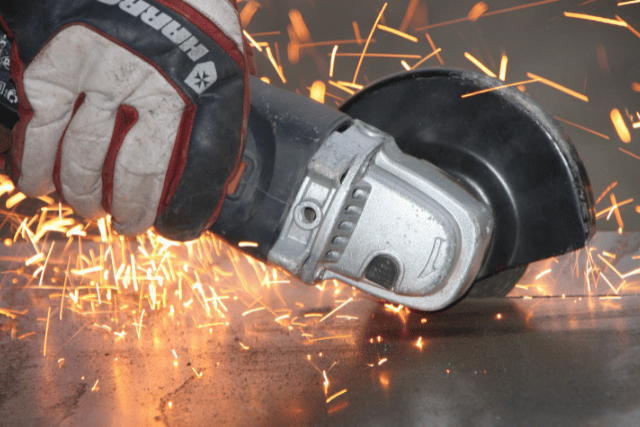


An angle grinder is a type of handheld power tool that is used for cutting, grinding, smoothing edges, finishing, and polishing different types of materials.
Angle grinders are versatile tools that can be used on a wide variety of materials. This is because their blades can be changed to suit whichever material you are working on.
Not only this but they come in different shapes, sizes, and power outputs, meaning that there is an angle grinder available for whatever material you are working with!
The most common types of materials angle grinders are used on include metal, masonry, stone, tiles, wood, plastic, fibreboard, and laminate.

Can An Angle Grinder Cut Wood?
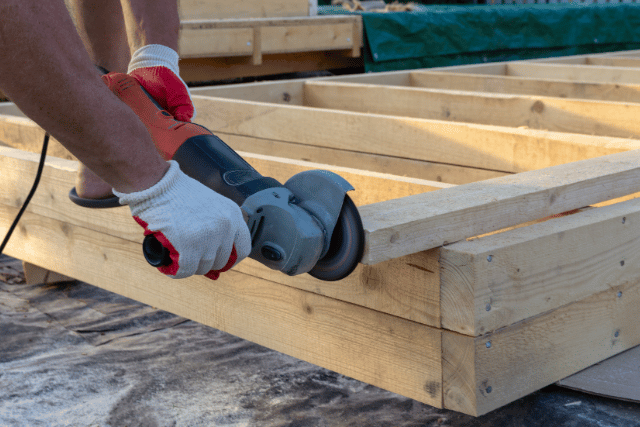
Yes, an angle grinder can cut wood. There are a few things to consider when using an angle grinder to cut wood.
It is important to use the right tool for the type of cutting you will be doing. If you need to cut wood precisely, an angle grinder may not be the best option.
This is because it can be difficult to achieve precise cuts with an angle grinder as its cutting action is designed more toward shaping and removal of material and rough cutting.
There are however blades available for angle grinders that are specifically designed to cut softer materials like wood.
These blades have more teeth and are finer than other blades, allowing you to have much better control and reducing the risk of safety issues like kickback from the machine, the blade getting stuck in the wood, or even losing control of the tool.
Can I Cut Granite With An Angle Grinder?
Yes, you can cut granite with an angle grinder. There are some extra steps and challenges that need to be taken into consideration when using an angle grinder to cut granite.
Granite is a very hard material, so you will need to use a blade that is up to the task. Luckily, there are certain types of blades that are designed to cut through this type of hard stone. Diamond cutting blades have diamond grit along the cutting edge, this makes it much easier to cut through granite.
Due to the density of granite, trying to cut into it will create a lot of heat and a lot of dust. Wet cutting is a technique that should be used to reduce the heat and dust created when cutting granite.
Using a consistent or intermittent flow of water during cutting will help to make cutting more efficient and safer by helping to cool the blade of the angle grinder, capture dust, and reduce friction.
It is always recommended to take the right precautions when using these sorts of tools and materials, by wearing protective equipment. This can include goggles, a dust mask, protective gloves, and ear defenders.

How to hold an angle grinder
Holding an angle grinder correctly is crucial for both safety reasons, but also so you can use it as effectively as possible. Here is how to hold an angle grinder:
Grip the Handle: The main handle of the angle grinder is designed for stability and control. Hold the handle firmly with one hand, keeping your fingers wrapped around it securely. Make sure you can comfortably reach the trigger switch with your index finger.
Support with the Second Hand: Use your other hand to support the weight of the angle grinder. Place your second hand on the auxiliary handle, which is typically located on the side or top of the tool. The auxiliary handle provides additional support and allows you to maneuver more effectively.
Positioning: Hold the angle grinder with both hands, keeping your arms slightly bent and close to your body. This helps to maintain balance and control over the tool. Position yourself in a stable stance with your feet shoulder-width apart to ensure a solid foundation.
Thumb Placement: Place your thumb along the top of the handle, pointing towards the front of the tool. This provides extra grip and control while operating the angle grinder.
Switch Finger: Keep your index finger positioned near the trigger switch, ready to activate or deactivate the tool as needed. Ensure that you can reach the switch comfortably without having to release your grip on the handle.
Maintain a Firm Grip: Throughout your work, maintain a firm but not overly tight grip on the angle grinder. This allows you to have control over the tool while reducing fatigue in your hands and arms.
Personal protective equipment should also be worn when using an angle grinder. Safety goggles, ear defenders, dust masks, and protective gloves will all help reduce the risk of injury.
How To Cut Slabs With Angle Grinder
Cutting slabs with an angle grinder can be done by following these steps:
Prepare the Work Area: Choose a well-ventilated and clear work area with sufficient space for the slab and your tools. Ensure there are no flammable materials nearby, and consider using a workbench or a stable surface to support the slab during cutting.
Choose the Right Blade: Select a diamond cutting blade specifically designed for cutting stone or masonry. The blade should have a size appropriate for your angle grinder, and its arbor hole should match the grinder’s spindle. Ensure the blade is in good condition and appropriate for the thickness and hardness of the slab.
Safety Precautions: Put on your personal protective equipment, including safety goggles, ear protection, gloves, and a dust mask. It is also advisable to wear long sleeves and pants to protect your skin.
Mark the Cut Line: Use a pencil or a marker to draw a clear and visible line on the surface of the slab, indicating the desired cut. Double-check the line’s accuracy and make any adjustments before proceeding.
Secure the Slab: Place the slab on a stable and flat surface, such as a workbench or sawhorses. Ensure it is securely positioned, so it doesn’t move or wobble during cutting. Consider using clamps or other methods to secure the slab if necessary.
Set Up Water Supply (if wet cutting): If you are performing wet cutting, set up a water supply near the cutting area. This can be done by attaching a water hose or using a water bottle with a small nozzle to provide a continuous or intermittent flow of water to the cutting area. Wet cutting helps cool the blade, suppresses dust, and prolongs the blade’s life.
Start Cutting: Hold the angle grinder firmly with both hands, following the proper grip techniques mentioned earlier. Position the cutting blade at the edge of the marked line on the slab. Turn on the angle grinder and ease the blade into the slab, applying gentle pressure. Allow the blade to do the cutting work—avoid excessive force or pushing the grinder too fast.
Maintain Control and Steady Movement: Move the angle grinder along the marked line, maintaining a steady and consistent pace. Keep your movements smooth and controlled. If performing wet cutting, ensure a continuous or intermittent flow of water to the cutting area.
Complete the Cut: Continue cutting along the marked line until you reach the end. Be cautious as you approach the end of the cut to avoid any kickback or binding. Gradually release the pressure on the grinder’s trigger to bring the blade to a stop.
Inspect the Cut: Once the cut is complete, inspect the slab to ensure the cut is clean and accurate. Check for any rough edges or unevenness that may need further smoothing or shaping.

How To Change Angle Grinder Disc
Here is how to change an angle grinder disc:
Before you begin changing the disc, unplug or remove the battery from the angle grinder. By doing this you can avoid any injury caused by turning it on accidentally. It is also recommended that you wear protective gloves while doing this.
Most angle grinders have a lock button or lever near the grinding wheel. You will need to press and hold the button to lock the spindle in place, allowing you to loosen the disc.
You can then begin to remove the disc by loosening the retaining nut on the disc. This can be done using an adjustable wrench, or the specific tool provided with your angle grinder. Once the nut is fully loosened you will be able to remove it.
You will then be able to remove the old disc by sliding it off the spindle. At this point, it is recommended that you take this opportunity to clean the spindle of the flanges of the angle grinder. Removing any residue left over from the old disc helps to create a secure connection with the new disc.
Install the new disc and align the centre hole with the spindle on the angle grinder, slide the disc onto the spindle, and then tighten it by hand. You can then use an adjusting wrench to tighten the nut.
Once the disc is secure, release the spindle lock to allow it to rotate freely. Before operating your angle grinder, ensure that the disc is properly installed and tightened by checking that it is not wobbly or loose.